A Small Art Walk Built Around One Detail
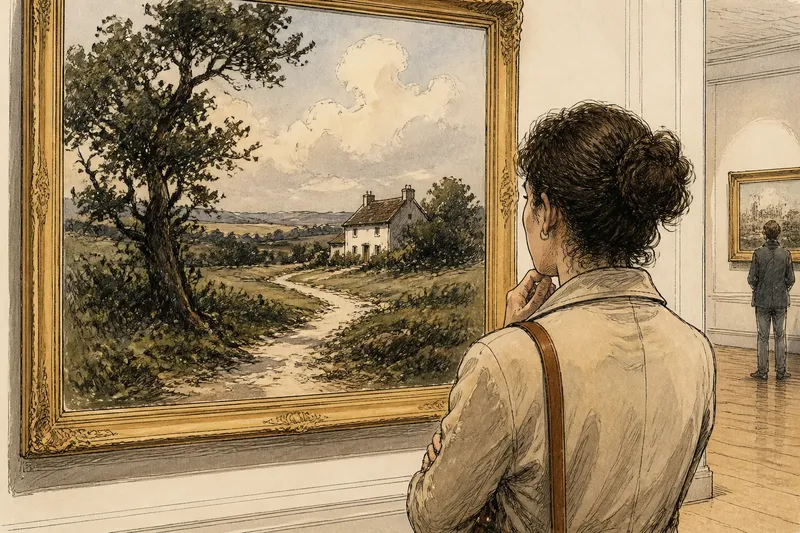
A small art walk built around one visual detail helps you notice change across works without rushing through rooms or relying on a checklist.
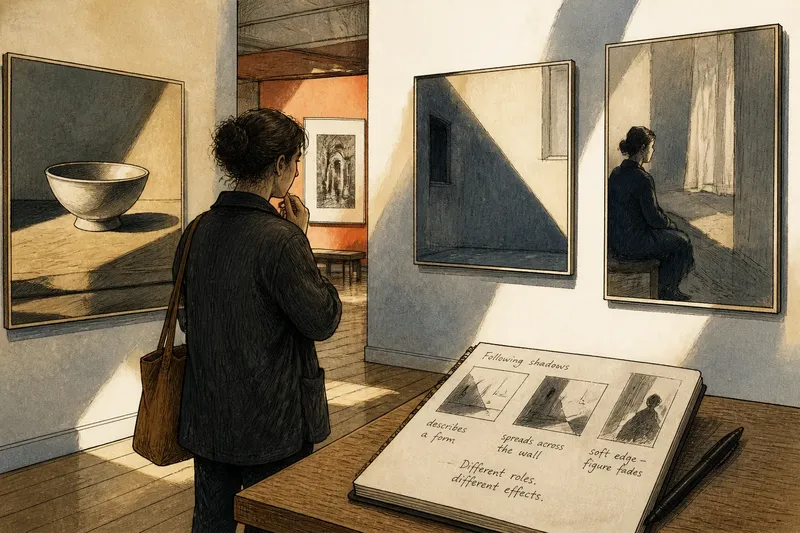
The most common mistake on a gallery visit is trying to see everything, and the cost is often a blur of rooms with little left to remember. A small art walk built around one visual detail gives your attention a manageable job: follow something specific, such as edges, repeated shapes, or patches of empty space, across several works. The point is not to solve the art. It is to notice how that detail changes as you move.
Choose a detail with room to vary
A useful detail is concrete enough to spot and broad enough to appear in different forms. Try edges: crisp outlines, softened boundaries, or a figure disappearing into a background. You might follow circles, folds, shadows, gaps between objects, or the way a color touches another color.
A subject such as “love” or “power” can send you straight into guesswork about meaning. A visual feature keeps the visit grounded in what is actually present. You can still wonder what it suggests, but begin with what your eyes can point to.
Say you choose shadows in a gallery of paintings and prints. In one work, a shadow may describe the shape of a bowl; in another, it may spread across a wall without clearly belonging to an object. The expected result is not a verdict about either artist, but a more precise sense of how shadows guide attention in different ways.
When the detail disappears
Sometimes your chosen feature barely appears in the first room. That usually means the detail is too narrow for the works on view, or that the room’s art uses it in an unexpected form. Rather than forcing a match, widen the wording: “straight lines” can become “directions,” or “bright red” can become “strong color accents.” Keep the change observable, not symbolic.
If the detail still does not turn up, switch once. Look at a nearby work and choose a feature you can identify there, then carry that new question forward. This is a small art walk, not a test of whether your first idea was clever.
When every work looks alike
Following one feature can flatten a visit if you only collect instances of it: another circle, another shadow, another red mark. The cause is often a question that asks only whether the detail exists. Add a second question about its role: Does it frame something, interrupt a pattern, create a pause, or pull your eye toward an edge?
For example, compare a curved line that contains a form with one that cuts across it. Both qualify as curves, but they behave differently. Notice the difference without ranking one as more successful. That shift keeps the walk attentive to variation instead of turning it into a hunt for matching objects.
When labels take over
Gallery labels can offer helpful context, but reading each one before looking may replace your own observations with information to remember. If you find yourself scanning for names and dates while the work fades into the background, look first and read selectively afterward. You might use a label to clarify the medium or the artist’s stated subject, then return to the detail you chose.
Some works have no label nearby, and some rooms are busy enough that lingering is uncomfortable. You do not need to wait for an empty gallery or stand in front of one object for a long time. Step aside when you can, take in what is visible, and move along if the space asks for it. The walk should fit the room, not obstruct it.
When the pace feels rushed
A focused visit can still feel hurried if you try to cover too many rooms. Pick a compact route that passes several works, and allow yourself to skip rooms that do not serve the question. A bench, doorway, or quiet corner can make a useful pause between clusters, especially when your eyes need a moment away from close looking.
Keep a brief note if it helps, but record observations rather than a full inventory. “The empty space gets wider near the figure” is more useful later than a string of room names. A quick phone note or a few pencil words in a pocket notebook can preserve the shift you noticed without turning the visit into documentation work.
Questions for the walk?
How many works should I follow?
Choose enough works to compare, without setting a quota that makes you rush. A small cluster across one or two nearby rooms is often easier to hold in mind than a full building route.
Should I choose a detail before arriving?
You can, but choosing after a first look at the galleries may make the detail easier to find. Let the available work shape your question, then keep it steady long enough to notice variation.
What if I cannot name what I notice?
Use plain descriptions: “dark patch near the frame” or “thin lines crossing the blue area.” You can refine the wording later; the first task is to stay close to what is visible.
Can I do this with a friend?
Yes, if you agree to look before comparing interpretations. Each person can name one visible change, then listen for a difference in attention rather than trying to settle on one correct reading.
Leave with one comparison
At the end, choose two works that used your detail in noticeably different ways. Put the difference into a sentence: one shadow hides a boundary, while another makes a form clearer; one gap feels open, while another presses objects together. This small comparison is a useful record of what the visit offered, even if you cannot recall every room.
A small art walk built around one visual detail works best when the detail remains a prompt, not a rule. If it stops helping you look, revise it; if it opens up a comparison, stay with that. You can leave the gallery with a sharper observation and still let the works remain more complicated than your notes.